Where to Stay in Bissau
Your guide to the best areas and accommodation types
Bissau stacks its beds along a tight grid between the Geba River waterfront and the Bandim market district, barely two kilometers apart. Colonial Bissau Velho shelters the most atmospheric guesthouses beside the old Portuguese fort, while the commercial streets around Bandim pack mid-range hotels that NGO staff and regional traders swear by.
Luxury has one address only: a single internationally affiliated hotel carries that role for the entire city. Dry-season rates stay flat from November through April. Carnival week in February or March triggers the single biggest demand spike. Reserve at least four weeks ahead for that window.
Budget
$25-50 per night for guesthouses and basic hotels
Mid-Range
$70-130 per night for NGO-grade and mid-range hotels
Luxury
$150-200 per night for Bissau's single internationally branded property
Our Picks
Ledger Plaza Bissau
→
Where to Stay in Bissau
Hand-picked hotels across price tiers for every visitor.
Our Top Picks
The highest-rated hotel in each price range, selected from all neighborhoods.
Top Pick: Bissau Velho
Budget
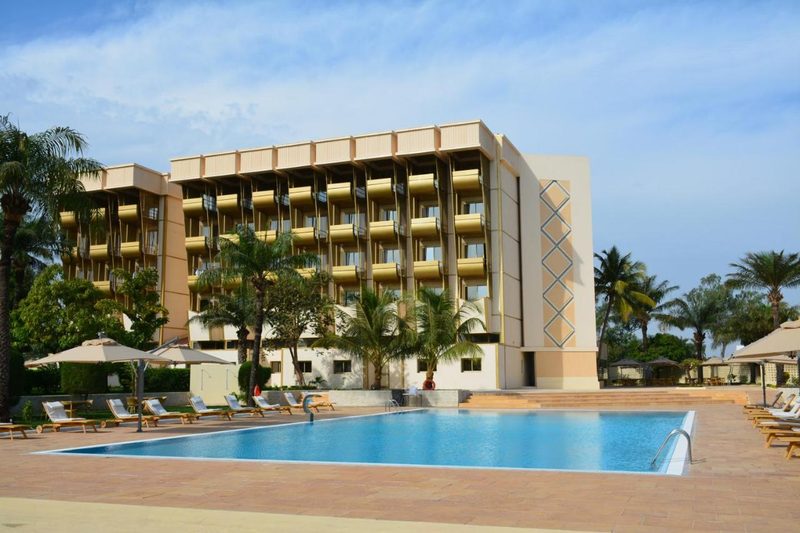
Dunia Hôtel Bissau
"The hotel was generally good.And the restaurant in the hotel seems to be a bit c…"
Outdoor swimming pool
Private parking
Airport pick-up
Luggage storage
Bissau Velho
Check prices on Trip.com →
Top Pick: Bissau Velho
Mid Range
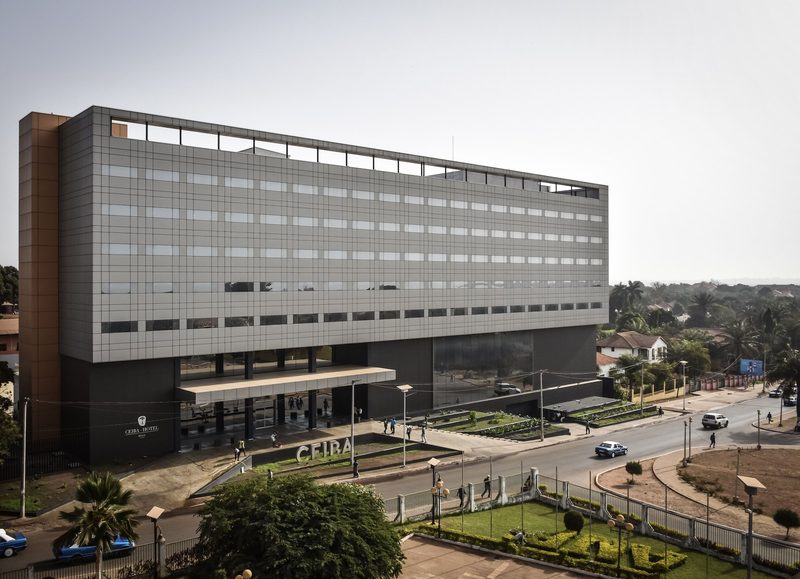
Ceiba Hotel Bissau
"In this place in Africa, we can only say that this price is acceptable. This hot…"
Sunbathing area
Outdoor swimming pool
Gym
Private parking
Bissau Velho
Check prices on Trip.com →
Best Areas to Stay
Each neighborhood has its own character. Find the one that matches your travel style.
Hotel recommendations verified
Bissau Velho
Mid-range to luxury
The original Portuguese colonial quarter clings to the southern waterfront, its cream-walled buildings wearing the patina of coastal humidity and salt air. Fortaleza d'Amura broods over the Geba River's edge, and the Pidjiguiti Memorial anchors the waterfront with solemn weight. Streets stay quiet enough for an evening walk, and the cool estuary breeze makes early morning strolls through this part of Bissau pleasant.
- ✓ Walking distance to the fort, presidential palace, and port
- ✓ Quieter street noise than the market districts
- ✓ River breeze keeps afternoon temperatures tolerable
- ✓ Most historically layered streetscape in Bissau
- ✗ Dining options thin out quickly after sunset
- ✗ Power outages more frequent than in newer residential zones
Recommended places to stay in Bissau Velho
Budget
Dunia Hôtel Bissau
"The hotel was generally good.And the restaurant in the hotel seems to be a bit c…"
Outdoor swimming pool
Private parking
Airport pick-up
Luggage storage
✓ Verified
Check prices on Trip.com →
Mid Range
Ceiba Hotel Bissau
"In this place in Africa, we can only say that this price is acceptable. This hot…"
Sunbathing area
Outdoor swimming pool
Gym
Private parking
✓ Verified
Check prices on Trip.com →
Mid Range
Hala Hotel & Aqua Park
"It is a nice hotel and I recommend this hotel for everyone"
Outdoor swimming pool
Parking
Bar
Tennis court
✓ Verified
Check prices on Trip.com →
Mid Range
Bissau Royal Hotel
"Guinea-Bissau Royal Hotel, Guinea-Bissau is the best and good service. The balco…"
Outdoor swimming pool
Massage room
Private parking
Luggage storage
✓ Verified
Check prices on Trip.com →
Budget
Casa Camba Mar
Luggage storage
Wi-Fi in public areas
Multi-function room
✓ Verified
Check prices on Trip.com →
Bandim
Budget to mid-range
Bandim is where Bissau's commercial energy pulses. Charcoal smoke drifts over the country's largest open-air market, minibuses idle at the central taxi rank with engines rumbling, and mobile-money kiosks line every corner. Street stalls serve steaming bowls of caldo de mancarra and grilled plantain from early morning until late into the sticky tropical night.
- ✓ Lowest hotel rates in the city center
- ✓ Direct minibus routes to the airport and upcountry destinations
- ✓ Full range of street food at any hour
- ✓ Banks, pharmacies, and SIM vendors within easy walking distance
- ✗ Market noise and motorbike traffic continue past midnight
- ✗ Exhaust fumes from the taxi rank make the immediate streets unpleasant in still air
Recommended places to stay in Bandim
Budget
Hotel Lisboa Bissau
"Very good hotels"
Luggage storage
Wi-Fi in public areas
✓ Verified
Check prices on Trip.com →
Mid Range
Coimbra Hotel & Spa
"Pessoal simpatico e prestavel. Pequeno almoco. muito agradavel. Uma biblioteca i…"
Sauna
Spa
Gym
Airport pick-up
✓ Verified
Check prices on Trip.com →
Budget
Hotel Imperio Bissau
"位於比紹中心位置"
Parking
Airport pick-up
Luggage storage
Airport drop-off
✓ Verified
Check prices on Trip.com →
Mid Range
Dunia Hotel 24 de Setembro
✓ Verified
Check prices on Trip.com →
Bairro Militar
Mid-range
The administrative quarter immediately north of Bissau Velho holds the National Assembly, several ministry buildings, and embassy residences set back behind whitewashed walls. Wide avenues shaded by neem and flamboyant trees replace the density of Bandim, and the air smells of cut grass and dust rather than market smoke. Hotels here cater almost entirely to diplomats, UN staff, and NGO coordinators.
- ✓ Quietest streets in the central city
- ✓ Walking distance to government ministries and embassy row
- ✓ More reliable generator coverage than the older colonial quarter
- ✓ Shaded avenues make on-foot errands bearable during the dry season
- ✗ Minimal restaurant options within the neighborhood itself
- ✗ Taxis harder to find outside standard business hours
Recommended places to stay in Bairro Militar
mid_range
Hotel Coimbra
Mindara
Budget
Mindara stretches northward from Bandim into a quieter residential fabric of family compounds and low concrete houses painted in faded ochre and blue. Foot traffic thins after sunset and the smells shift from market diesel to cooking fires and night-blooming jasmine drifting over garden walls. This is residential Bissau, unhurried and almost entirely local.
- ✓ Noticeably cheaper than the central neighborhoods
- ✓ Genuine residential atmosphere with almost no tourist-facing businesses
- ✓ Lower traffic noise overnight
- ✓ Close to the northbound routes toward Canchungo and Farim
- ✗ Fifteen to twenty minutes by taxi from the waterfront and main sights
- ✗ Very few restaurants within comfortable walking distance
Recommended places to stay in Mindara
mid_range
Aparthotel Coimbra
Antula
Budget
Antula occupies the eastern edge of Bissau where newer construction mixes with older family compounds shaded by mango and cashew trees. The scent of roasting cashews hangs in the air between February and May during harvest season. It is the quietest sector of the city and is well connected via the main eastern artery to Bafatá and the interior.
- ✓ Calmer atmosphere than anywhere in the city center
- ✓ Lower accommodation prices across all tiers
- ✓ Good road connection to the eastern interior and upcountry bus services
- ✓ Cashew-shaded streets provide genuine relief from midday heat
- ✗ Transport required for virtually all restaurants and sights
- ✗ Infrastructure noticeably thinner than central neighborhoods
Recommended places to stay in Antula
mid_range
Hotel Estoril
Penha
Budget
Penha fringes the western edge of Bissau where Geba wetlands and mangrove channels cool the air and amplify a chorus of weaver birds and kingfishers at dawn. Mopeds replace minibuses on the unpaved lanes, and guesthouses occupy converted family homes behind bougainvillea walls. This is the closest neighborhood to the pirogue departure points for the Bijagós Archipelago.
- ✓ Morning bird calls from the mangrove edge are extraordinary
- ✓ Closest neighborhood to Bijagós pirogue departure points
- ✓ Cool estuary breeze every evening
- ✓ Lowest accommodation prices in Bissau
- ✗ The farthest central neighborhood from sights, restaurants, and ATMs
- ✗ Unpaved roads flood quickly and become impassable during rainy season
Recommended places to stay in Penha
Find Hotels in Bissau
Compare prices and book your perfect stay
Find the best hotel for your stay on Trip.comPrices via Trip.com. We may earn a commission from bookings.
Accommodation Types
From budget-friendly hostels to luxury hotels, here's what's available.
Hotels
$70-200 per night
Bissau hotels run the gamut. Expect NGO-grade mid-range blocks. Then comes the single international flag: Ledger Plaza. That is the range.
Best for: Business travelers need power that stays on. NGO workers need daily housekeeping. Visitors want both. These groups book the reliable spots.
Email or call before you trust online calendars. Bissau hotels are small. Real-time updates are rare. Direct contact locks in generator hours and airport pickup.
Guesthouses
$25-55 per night
Family pousadas occupy old colonial villas. Ceiling fans spin above courtyard breakfasts. Shared generators hum after sunset. Budget charm with character.
Best for: Solo travelers like the home vibe. Budget visitors save cash. Long-stay guests avoid stiff hotel rules. These people choose pousadas.
Ask about generator hours. Some places cut power at midnight. No overnight air conditioning then. Make this a dealbreaker.
Serviced Apartments
$60-110 per night, with monthly rates negotiated significantly lower
A few aparthotels offer studio flats. Kitchenettes let you cook. Weekly laundry keeps shirts clean. NGO staff on month-long gigs favor these.
Best for: Expats arrive on assignment. NGO staff rotate in for months. Organizations post teams here. They all need long-stay studios.
Monthly rates sit below the nightly rack. Speak to the property manager. Always ask for the long-stay figure. Never accept the first quote.
Booking Tips
Insider advice to help you find the best accommodation.
Phone or email beats booking platforms. Platforms lag. Direct contact wins. Do it.
Most Bissau guesthouses skip big booking sites. Even listed ones show stale availability. One call confirms room status, generator hours, and free airport pickup. Most properties offer the ride gratis.
Carnival week fills every tier of Bissau accommodation simultaneously
Guinea-Bissau's Carnival erupts each February or March. It ranks among West Africa's liveliest festivals. Bissau's tiny room stock vanishes weeks early. Reserve four to six weeks ahead with direct confirmation.
Generator schedules determine comfort as much as room quality
Power cuts hit Bissau daily. Ledger Plaza keeps its generator running 24/7. Mid-range hotels cover evening and dawn. Budget spots may offer only a few hours. Need overnight air conditioning? Check the schedule first.
Rainy season brings discounts and real trade-offs
June through October brings brutal humidity. Penha and Mindara roads flood. Mosquitoes multiply. Rates fall and walk-ins open up. Poorly ventilated rooms become ovens. Pick places with fans, screens, and raised floors.
When to Book
Timing matters for both price and availability.
High Season
Book three to four weeks ahead for November through February. Carnival week demands six weeks minimum. Call the property directly. Lock it in.
Shoulder Season
March through May balances dry skies with quiet streets. Rooms appear without long lead times. Ideal window.
Low Season
June through October equals rainy season. Prices drop and walk-ins succeed. Flooding can trap you. Humidity punishes stuffy guesthouses.
Two weeks covers most trips. Carnival needs six. Mark your calendar.
Good to Know
Local customs and practical information.
Check-in / Check-out
Check-in hovers around 14:00. Check-out lands near 11:00. Larger hotels store bags. Smaller guesthouses might not. Ask when booking.
Tipping
Tipping is not customary. Round up for laundry help or taxi calls if you wish. Appreciated, never required.
Payment
Cash in West African CFA francs rules Bissau. Ledger Plaza takes cards. Most guesthouses do not. Ecobank near Bandim dispenses cash reliably. Bring enough if you land after hours.
Safety
Bissau stays calm overall. Petty theft clusters around Bandim market. Use the room safe. Hide phones after dark. Take a taxi home late.
Ready to plan your trip to Bissau?
Now that you've got the research covered, here's where to go next.